


Ref. No - BFS938032
 South Africa, Gauteng
Ref. No - BFS938032
Sector - Services
Summary
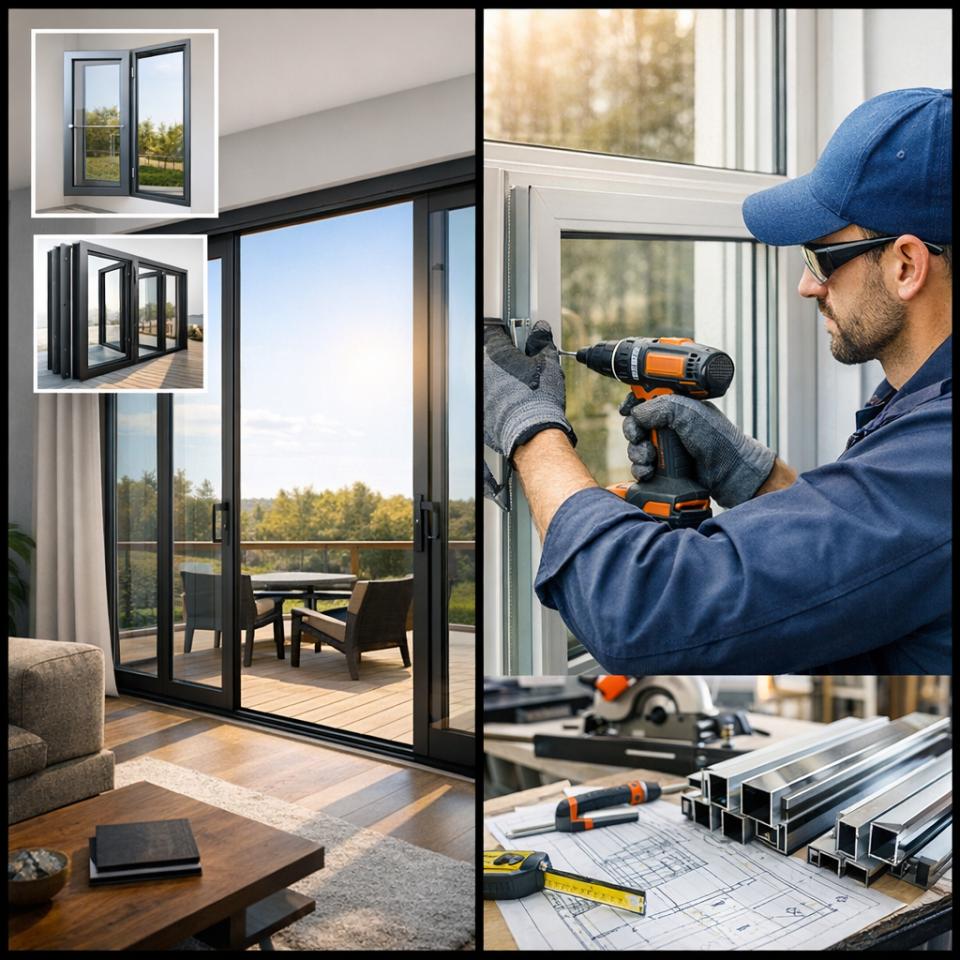
Owner-managed aluminium manufacturing and on-site installation operation for sale. Strong connections with contractors, QS supplier lists and architect/builders’ referrals. Commercial progress-claim model with standard retention structures on projects. Flexible premises lease available from the landlord with 8% annual escalation. Ideal bolt-on or owner-operator acquisition with identifiable growth levers.
Give me more informationFully describe the business's activities?
• Aluminium windows (including sliding, pivot, top-hung and side-hung configurations)
• Aluminium doors (including sliding, folding/stacking, French and double doors)
• Shopfront supply and installation
• Double-glazing solutions
• Custom aluminium systems designed to client specifications
The business provides a full turnkey service, managing the process from initial consultation and site measurement through to shop drawings/specification confirmation (where required), fabrication, glazing preparation and final installation on site.
How does the business operate on a daily basis?
Operational delivery is completed by an in-house production and installation team. Workshop production is undertaken by two fabricators, supported by two glass cutters, who prepare glazing components required for completed frames and units. Installation is carried out by two dedicated installation teams (two installers per team) who fit aluminium windows and related products on site in line with job specifications and agreed timelines.
For larger projects, the business supplements its internal capacity with a long-standing subcontractor who acts as a project foreman to coordinate site activities and manage execution, enabling the business to scale delivery while maintaining oversight and quality control.
In a typical daily cycle, work flows from enquiry/tender pricing and acceptance, to job planning and materials procurement, to workshop fabrication and glass preparation, and finally to on-site installation and close-out.
How are the clients attracted to the business?
What Advertising/Marketing is carried out?
Business directories
Project portfolios and completed work references
The business relies more on reputation and referrals than aggressive paid advertising.
What percentage of the business is cash/credit?
Residential work is generally collected on a deposit basis, typically 80% upfront and 20% on completion. As residential work represents a smaller portion of overall activity (approximately 10%), the overall cash/credit profile is weighted toward commercial credit and progress-claim payments
How could the profitability of the business be improved?
• Add a part-time or full-time estimator/sales representative ("rep on the road") to widen the tender pipeline, follow up quotations, and reduce the owner bottleneck in pricing and business development.
• Increase the residential contribution (currently a minority of work) through targeted marketing to homeowners, developers and small builders, and by standardising pricing on common window/door ranges to improve quote turnaround time.
• Introduce a repairs and maintenance offering (e.g., roller and handle replacements, alignment, seal replacement, glazing call-outs, shopfront repairs). This can create recurring revenue, improve cash flow, and provide work continuity between large projects.
• Scale delivery on large projects through continued use of the established subcontract foreman arrangement and additional subcontract installation capacity where profitable, without permanently increasing fixed overhead.
Overall, the largest opportunity is to broaden the flow of tender invitations and smaller private jobs so that capacity is filled more consistently, while maintaining disciplined job selection and margin management to avoid low-profit projects.
Give a breakdown of staff/ functions/ length of service?
• 2 x glass cutters: responsible for cutting and preparing glass for glazing requirements across projects.
• 2 x fabricators: responsible for workshop fabrication and assembly of aluminium frames and units.
• 4 x installers (two teams): responsible for on-site installation, fitment, sealing and completion of aluminium windows/doors and related products.
• Up to 4 additional workers (as required): brought in on an as-needed basis to assist during peak periods and increased workload.
• Project foreman (subcontract, as required): engaged on larger projects to coordinate and oversee site execution; this is a long-standing relationship in place since 2010.
The staffing structure is stable, with most key operational staff having been with the business since 2010 and 2016. This enables efficient delivery under high-pressure project timelines while allowing capacity to be flexed through additional labour and a subcontract project foreman on larger projects.
Do any have management potential?
How involved is the Owner in running the business?
When does the current lease end?
What are the trading hours?
Weekends: Closed unless they are busy with big projects in which case they will work on Saturdays.
What are the main assets of the business?
Double head cutting saw.
Single head cutting saw.
Pneumatic crimper.
Copy router.
Glass ploish machine.
The complete asset list will be shared with serious buyers.
Which assets are on lease/HP and with whom?
Strengths?
• Strong referral network with building contractors, quantity surveyors and architects, including inclusion on multiple supplier lists.
• Turnkey capability (measure/specification confirmation, fabrication, glazing preparation and installation), enabling control over quality and delivery.
• Stable and experienced core team (key staff largely in place since 2010 and 2016), supporting efficient delivery under project pressure.
• Operational scalability through flexible labour and a long-standing subcontract project foreman relationship for larger projects (in place since 2010).
Weaknesses?
• Project selection is influenced by owner preference/capacity, which can limit the volume of tenders priced and reduce revenue consistency.
• Revenue is weighted toward commercial progress billing with retentions, which can pressure cash flow and working-capital requirements.
• Limited diversification at present (low residential mix and no dedicated repairs/maintenance stream) reduces recurring income between large projects.
Opportunities?
• Grow residential sales through targeted marketing and standardised product/price packages to improve margins and cash collections (deposits).
• Introduce a repairs and maintenance division (hardware replacements, adjustments, glazing call-outs and shopfront repairs) to create recurring revenue and improve continuity of work.
• Expand relationships with quantity surveyors, builders and architects to increase invitations to tender and secure preferred-supplier status on more projects.
• Improve systems and controls (job costing, variation management, procurement planning and scheduling) to protect margins and reduce rework.
• Leverage flexible capacity (subcontract foreman and additional labour) to take on larger projects without materially increasing fixed overhead.
Threats?
• Late payment, dispute risk and delayed release of retentions on commercial projects can impact cash flow.
What is the reason for the sale?
Why is this a good business?
• Established commercial pipeline: Approximately 90% of work is commercial and project-driven, typically secured via tendering, supported by repeat invitations from long-standing corporate clients.
• Strong referral network: Ongoing work is supported through building contractors requesting aluminium pricing/appointment, inclusion on QS supplier lists, and referrals from builders and architects.
• Turnkey capability: The operation provides end-to-end service (measurement/specification confirmation, fabrication, glazing preparation and installation), supporting quality control and reliable project delivery.
• Stable, experienced team: Core staff are long-serving (predominantly since 2010 and 2016), enabling efficient output and performance under high-pressure site timelines.
• Scalable delivery model: Capacity can be flexed through additional labour and a long-standing subcontract project foreman used on larger projects (relationship in place since 2010).



Access to the number one business broking tool to get your business sold.
We've got you covered!
We offer an innovative and intuitive
solution for selling your business, franchise and premises

Promote
your business for sale

Reach
the right audience

Gain
more exposure

More businesses you may like
More similar, inspiring businesses for sale
Cleaning company that operates as a work-from-home business
440,000
YNP - R 180,155

Turnkey wellness business offering established brand presence and recurring revenue streams.
1,700,000
YNP - R 834,165

Beauty in Sandton. Skin. Hair. Body. Upmarket Beauty Parlour for Sale.
2,000,000
YNP - R 874,718

Cash-Generative Cleaning Services Business – Low Overheads
2,450,000
YNP - R 1,104,853
Knowledge Bank
Get the latest information, valuable tips and share in the professional knowledge of business experts on selling or buying a business
Buyers

Hire the Expertise, Not the Headcount
Growing businesses often need senior expertise without being able to justify the cost of another ful

The Agreement You Trusted, and Why It Failed You
Free contract templates and AI tools can help you get started, but they cannot replace professional

Good Debt, Bad Debt, and the Money Sitting Idle
Not all debt is bad. Discover the difference between good debt and bad debt, and learn how smart bus
Sellers

A Good Offer Is About What Is There and What Is Not
A good business offer is about more than what a business has today. Discover how buyers assess poten

Why Normalising Your Numbers Can Make or Break the Sale
Normalising your financials helps buyers see the true earning power of your business. Learn which ad
Cash in the Bank Is Not the Same as Cash You Can Use
A healthy bank balance can be misleading. Learn why some of your business cash is already committed